Selected Publications
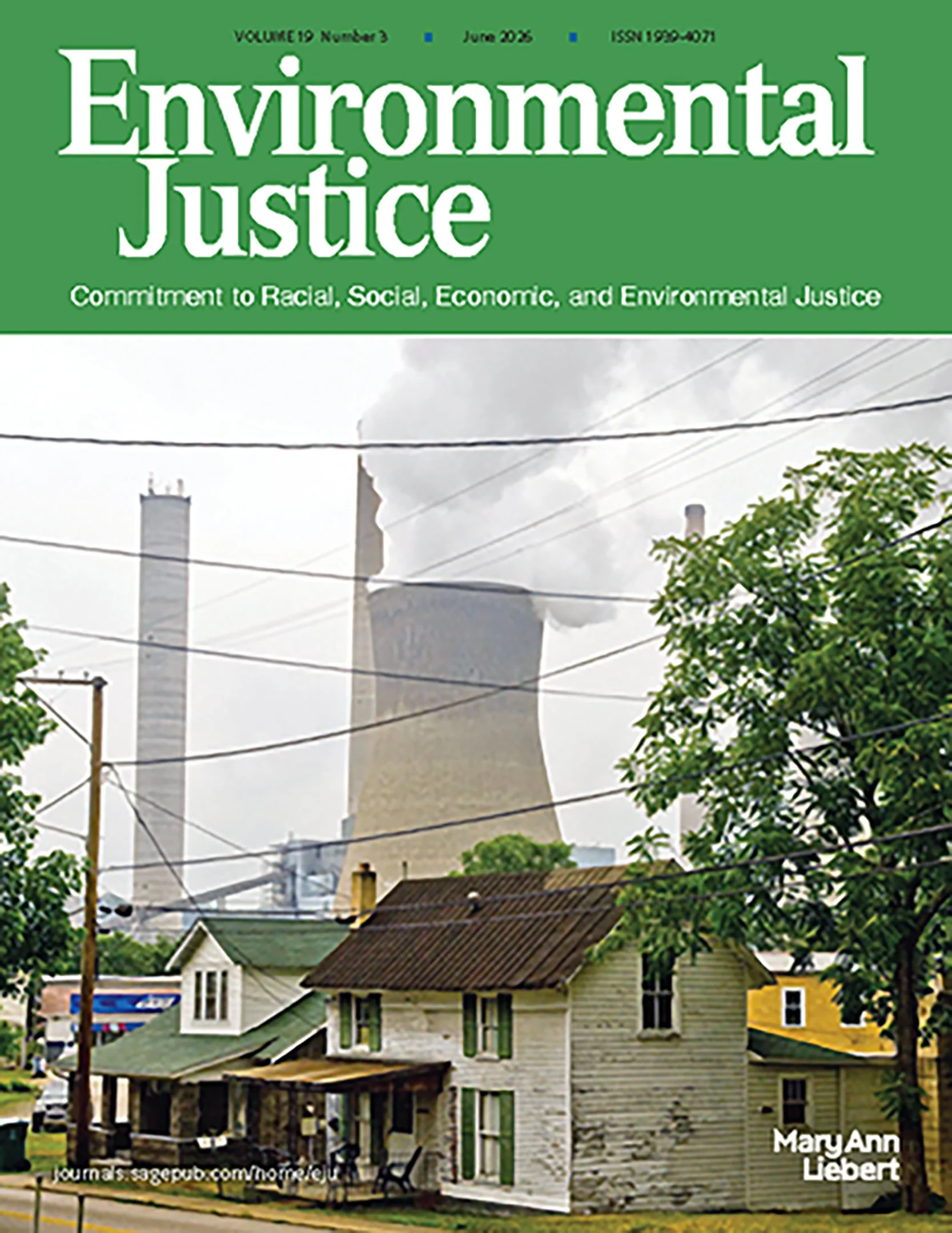
Environmental Justice Victory? Waste Colonialism and the Afterlife of Lead Water Pipes (2025)
Chie Togami, Caitlin Schroering, Marcela González Rivas, Talor Musil
For centuries, lead (Pb) pipes have been used to convey water for public consumption, resulting in widespread negative health impacts caused by lead-contaminated water. In 2022, after years of urging by environmental justice advocates, the U.S. federal government announced a plan to replace all lead service lines via the Biden-Harris Lead Pipe and Paint Action Plan (LPPAP) funded by the Bipartisan Infrastructure Law and American Rescue Plan. This announcement was celebrated as a massive victory for environmental justice advocates and the thousands of communities impacted by aging lead service lines. However, it also raises a critical question—what will become of the lead pipes after removal? In this article, we connect the lead service line removal initiative with the concept of “waste colonialism,” asking: How does critical environmental justice provide a lens to complicate our understanding of the LPPAP? Drawing on initial findings from research conducted in the city of Pittsburgh, PA, and insights from critical environmental justice scholarship, we critique the notion of environmental justice ending at national borders and argue that it is imperative that government programs adopt a comprehensive approach to environmental justice, one that considers global impacts—as well as equity—in the implementation of remediation efforts.
https://journals.sagepub.com/doi/abs/10.1177/19394071251372726
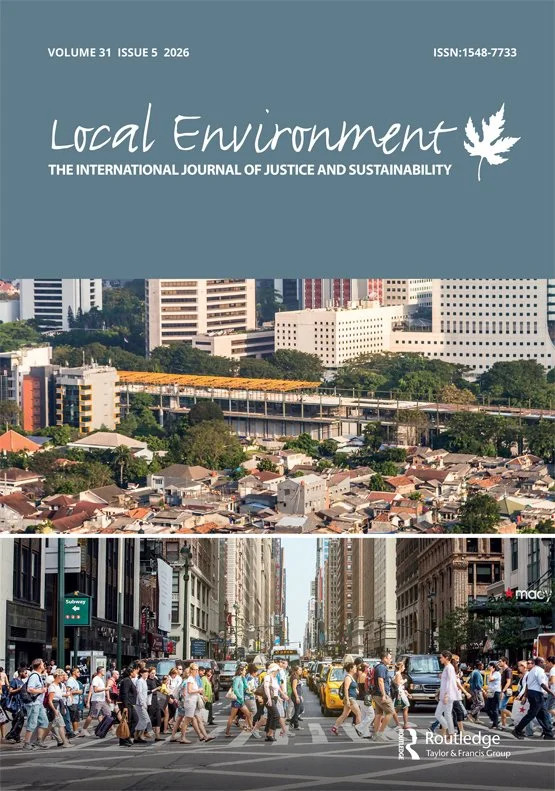
The politics of airing grievances: an analysis of air quality knowledge and ignorance in Pittsburgh (2023)
Chie Togami and Michael Warren Murphy
Pittsburgh's airshed is among the most surveilled and studied in the United States, yet its residents continue to endure some of the worst air quality in the United States. In 2016, in response to the decades-long failure of the local Board of Health to take decisive action against regional polluters, Pittsburgh residents began documenting their air quality complaints using the Smell Pittsburgh app. Drawing from an analysis of thousands of Smell Pittsburgh users’ reports, interviews with local air activists, and observations of Board of Health meetings, we investigate why air quality authorities dismiss the information generated by Smell Pittsburgh. By examining the Smell Pittsburgh data and asking what is being ignored by environmental regulators, we show that the app is threatening insofar as it serves as a repository of uncomfortable knowledge that testifies to the extent of environmental suffering generated by the region's hazardous air.
https://www.tandfonline.com/doi/abs/10.1080/13549839.2023.2300961